The Iranian date industry plays a pivotal role in the nation’s agriculture, trade, and culture. With more than 400 varieties of dates cultivated across the country, Iran consistently ranks among the top three producers globally. Dates are not only a staple food in Iranian households but also a critical export commodity that connects Iran to markets across Asia, Europe, and North America.
This article provides a comprehensive value chain analysis of the industry. By examining every stage—from cultivation to date export logistics—we can identify the key challenges, strengths, and opportunities that shape the future of the Iranian date sector.
Production Landscape in Iran
Iran is home to a diverse climate that allows for the cultivation of numerous date varieties. The leading provinces in production include Kerman, Khuzestan, Bushehr, Hormozgan, and Fars. Among the most famous varieties are:
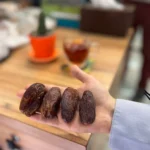
Mazafati: Soft, sweet, and juicy, primarily grown in Bam (Kerman).
Zahedi: Semi-dry and long-lasting, widely cultivated in Fars and Bushehr.
Sayer (Estamaran): Semi-dry, mainly grown in Khuzestan, and favored in Europe and Russia.
Piarom: Luxury, high-value variety, mostly cultivated in Hormozgan.
Kabkab and Shahani: Consumed locally and in Gulf markets.
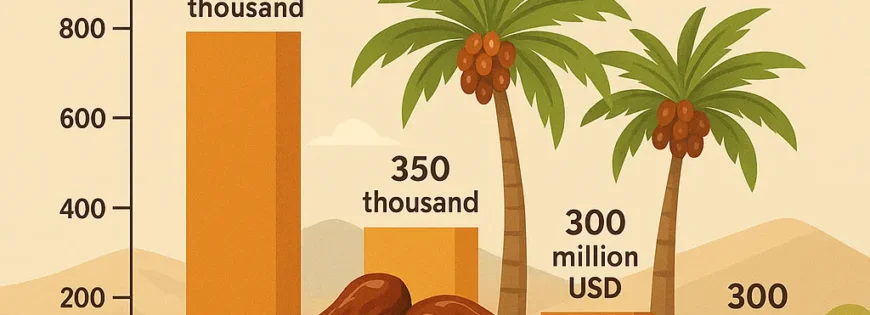
Annual production exceeds one million tons, with around 250,000–300,000 tons exported. Despite this impressive volume, the share of value-added exports (branded, packaged dates) remains low.
Stages of the Value Chain
1. Cultivation and Harvesting
Traditional methods dominate Iranian date farming. While these methods preserve heritage, they often result in lower yields and inconsistent quality. Mechanization and modern irrigation remain limited.
2. Processing and Grading
Sorting and grading are usually done manually. This lack of standardization reduces competitiveness in the global market, where consistency and compliance with international standards are essential.
3. Packaging
A significant weakness in the Iranian date industry lies in packaging. Many dates are exported in bulk or in unattractive, non-standard packages. International consumers demand modern, food-grade packaging with branding and nutritional information.
4. Cold Storage
Due to limited cold storage infrastructure, spoilage rates remain high, especially for varieties like Mazafati, which require refrigeration. Expanding cold chain logistics is critical.
5. Domestic Distribution
Local consumption is strong, but the domestic logistics network lacks efficiency. A more organized system could help stabilize supply and reduce waste.
6. Export Logistics
A large portion of exports is raw and unbranded. This limits Iran’s value capture and exposes the country to intense price competition from rivals like Egypt and Saudi Arabia.
Key Challenges in the Value Chain
Outdated farming methods reduce productivity.
Non-standard packaging lowers appeal in high-end markets.
Cold storage limitations increase spoilage.
Weak branding and marketing prevent Iranian dates from competing with Tunisia or UAE brands.
Exporting raw products keeps profit margins low.
Global Market Analysis
Major Importers
The biggest markets for Iranian dates include:
India and Pakistan: Largest importers, especially of Mazafati.
UAE: Functions as a re-export hub.
Russia, Kazakhstan, Uzbekistan: Strong demand for Zahedi and Sayer.
Europe (Germany, UK, France, Poland, Scandinavia): Interested in Piarom and Sayer.
China and Malaysia: Growing consumer markets.
Competitors
Egypt: World’s top producer, dominates bulk exports.
Saudi Arabia: Expanding aggressively with government-backed branding.
Tunisia: Specializes in Deglet Noor, highly branded and globally recognized.
Iran’s Advantages
High quality and diversity of varieties.
Competitive pricing compared to rivals.
Cultural appeal in Muslim-majority markets.
Opportunities for Growth
Premium and Luxury Markets
Piarom dates can compete with Medjool in high-value markets like Europe, Japan, and Canada.Organic and Health-Conscious Consumers
Growing demand for organic products creates a niche market for Iran.E-commerce and Direct-to-Consumer Sales
Selling packaged dates through platforms like Amazon or Alibaba can bypass intermediaries.Brand Development
Iranian companies can create global brands that emphasize authenticity, tradition, and health benefits.
Strategies for Competitiveness
Branding and Storytelling: Emphasize Iran’s heritage and the health benefits of dates.
Upgraded Packaging: Invest in international-standard, attractive packaging.
Export Consortia: Form clusters of exporters to pool resources and strengthen bargaining power.
Government Support: Trade agreements, subsidies for cold storage, and quality certification.
Case Studies: Lessons from Competitors
Tunisia: Focused on premium branding of Deglet Noor, gaining a reputation in Europe.
UAE: Invested heavily in re-export logistics and modern packaging.
Saudi Arabia: Supported by government programs that market dates as a cultural and luxury product.
Lesson for Iran: To succeed in the global market, Iran must shift from bulk exports to value-added exports with branding and packaging.
📊 Table: Value Chain of the Iranian Date Industry
| Stage of Value Chain | Current Situation in Iran | Challenges | Opportunities for Export Growth |
|---|---|---|---|
| Cultivation & Harvesting | 400+ varieties across provinces (Kerman, Khuzestan, etc.) | Outdated farming practices, low mechanization | Improve yields with modern technology & irrigation |
| Processing & Grading | Manual sorting, basic grading | Lack of standardization | Introduce automated grading for international quality |
| Packaging | Traditional or bulk packaging | Non-standard, unattractive for global market | Upgrade to international food-grade, branded packages |
| Cold Storage | Limited and outdated facilities | Spoilage, reduced shelf life | Investment in modern cold chain infrastructure |
| Domestic Distribution | Strong local consumption | Weak logistics network | Build national logistics hubs |
| Export Logistics | Large volumes exported raw (Mazafati, Zahedi) | Low value-added, price competition | Focus on premium varieties (Piarom, Sayer) & branding |
Conclusion
The value chain analysis of the Iranian date industry demonstrates that while Iran is one of the largest producers globally, the country captures only a fraction of the potential value in the global market. The reliance on bulk and raw date export undermines profitability and limits competitiveness.
To move forward, Iranian exporters and policymakers must prioritize:
Modernizing cultivation and processing methods.
Investing in packaging and cold storage infrastructure.
Building strong global brands that highlight authenticity, tradition, and quality.
Targeting niche markets such as premium consumers in Europe, Japan, and North America.
By transforming challenges into opportunities, the Iranian date industry can not only maintain its global position but also expand its share in high-value markets. The future lies in branding, innovation, and strategic market development.
“For business inquiries and partnership opportunities in the Iranian date industry, please feel free to contact us today.”
👉contact Form:click here
👉whatsapp contact:click here